Within a brand-driven organization, there may be no function more critical than marketing’s role in shaping future financial (cash flow) performance. Financial outcomes are typically attributed to four core drivers: volume, price, mix, and cost. Marketing’s influence on both volume and price is widely recognized. Put in basic economic terms, strong marketing elevates brand preference, shifting the demand curve upward and to the right. The brand owner can then decide whether to translate this shift into higher volume, higher prices (and therefore margins), or some combination of the two at any point along the enhanced demand curve.
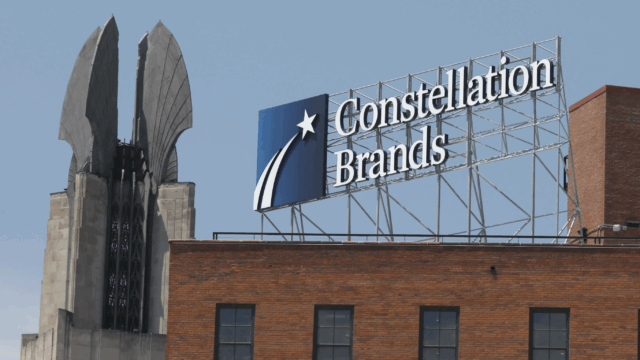
Mix refers to the extent to which different brand options can be created and maintained, often at distinct price tiers. Marketing, as a direct expenditure, clearly affects costs and also shapes other non-marketing costs. Few would dispute that, all else being equal, highly effective marketing boosts sales volume (and perhaps the reverse is also true). In the beer category, most observers would point to Constellation Brands as a standout in the industry’s intense marketing contest. Constellation’s leadership is clearly behaving as though they see something closer to true causation than mere coincidence.
This article is part of Branding Strategy Insider’s newsletter. Join the world’s smartest marketers and subscribe here for practical insights delivered straight to your inbox.
Another significant consequence of effective marketing is its impact on how consumers behave around price. This positive effect can appear as a greater willingness to pay a premium or as a readiness to purchase at full (non-promoted) price instead of waiting for a discount. Both outcomes benefit the marketer who has built a strong brand. A well-designed Financial Value of Brands framework could, in theory, signal an erosion of pricing power before it shows up as margin compression on the income statement.
Mix is frequently misunderstood at best, or at worst, overlooked entirely when considering how marketing drives financial performance. Within a diversified beer portfolio, imagine the financial upside of trading a consumer up from budget Keystone Light to mainstream Coors Light. Or from Fairfield Inn & Suites to JW Marriott. Or from private-label pot pies to Banquet or Marie Callender’s branded products. These shifts, which typically appear in the revenue line, are both substantial and impossible to ignore.
Marketing can also shape non-marketing costs in multiple ways. A packaging or graphics decision that affects consumer demand (and thus volume) may raise or lower cost of goods. Over time, effective marketing can reduce the need for certain research and development or market research expenditures. Strong brand marketing can foster goodwill among lenders and investors, lowering the cost of capital. It can even enhance employee pride, decreasing turnover, improving recruiting efficiency, and strengthening other human resources outcomes. At a broader level, cumulative marketing improvements across an economy can have a macroeconomic effect, enlarging the overall “size of the pie.”
Marketing clearly influences the four classic financial drivers — volume, price, mix, and cost — and then introduces a fifth, longer-term, and extremely powerful factor: optionality.
The Fifth Driver – Optionality
So what is this fifth driver, optionality? It is defined as “opportunities to leverage investments in a marketing asset, such as a brand name, customer franchise, or distribution network… In the case of a brand, it is the use of the brand name beyond the initial covered products through a brand or line extension.” Going beyond simple line extensions, optionality encompasses all brand extensions that unlock growth opportunities beyond the brand’s original expression.
An example helps illustrate this. Frozen, Disney’s full-length animated adaptation of Hans Christian Andersen’s The Snow Queen, was released to enormous success. The film generated an estimated $1.3 billion in worldwide box office revenue, but Disney’s real mastery lay in how it exploited Frozen’s optionality. Beyond multiple video and audio releases, including the 2019 sequel Frozen 2, Disney monetized the franchise through consumer products, a touring ice show, and a Broadway musical. Legendary investor Charlie Munger once likened Disney to “an oil company that can put the oil back in the ground after it is done drilling so it can drill it again.”
Consider also the value created by Constellation through the optionality of the Corona brand — first Corona Light, then Corona Premier and Corona Familiar, and most recently Corona Hard Seltzer. While these extensions remain within the same general category rather than leaping to entirely new platforms as Frozen did, they still represent a powerful example of how line extensions can harness the financial strength of optionality.
Together, volume, price, mix, cost, and optionality form what we describe as the five financial value drivers of marketing. These drivers make it possible to clearly trace and articulate the link from effective marketing activities to brand preference, and from there to profitable growth, stronger cash flows, and higher enterprise value.
As a marketer, your mandate is to compete. Compete in new ways with The Blake Project.
To end with a bit of a challenge:
If you asked most people who serves as the Chief Asset Steward at a public company, the most common answer would probably be the Chief Financial Officer. In light of this discussion, is it possible that the Chief Marketing Officer is actually the Chief Asset Steward in a brand-centric business?
Even if that is only partially accurate, it raises serious questions about the composition of many boards, which often include few, if any, marketing specialists, and about the widespread absence of CMOs from quarterly earnings calls.
Contributed to Branding Strategy Insider by Jim Meier, retired Finance executive of Molson Coors Beverage Company, Trustee of the Marketing Accountability Standards Board (MASB), Co-Author, The Financial Value of Brands Imperative.
At The Blake Project, we partner with clients worldwide, at every stage of growth, to define and express what makes them competitive and valuable at pivotal moments of change. Please email us to explore how we can help you compete differently.
Branding Strategy Insider is a service of The Blake Project: A strategic brand consultancy specializing in Brand Research, Brand Strategy, Brand Growth and Brand Education