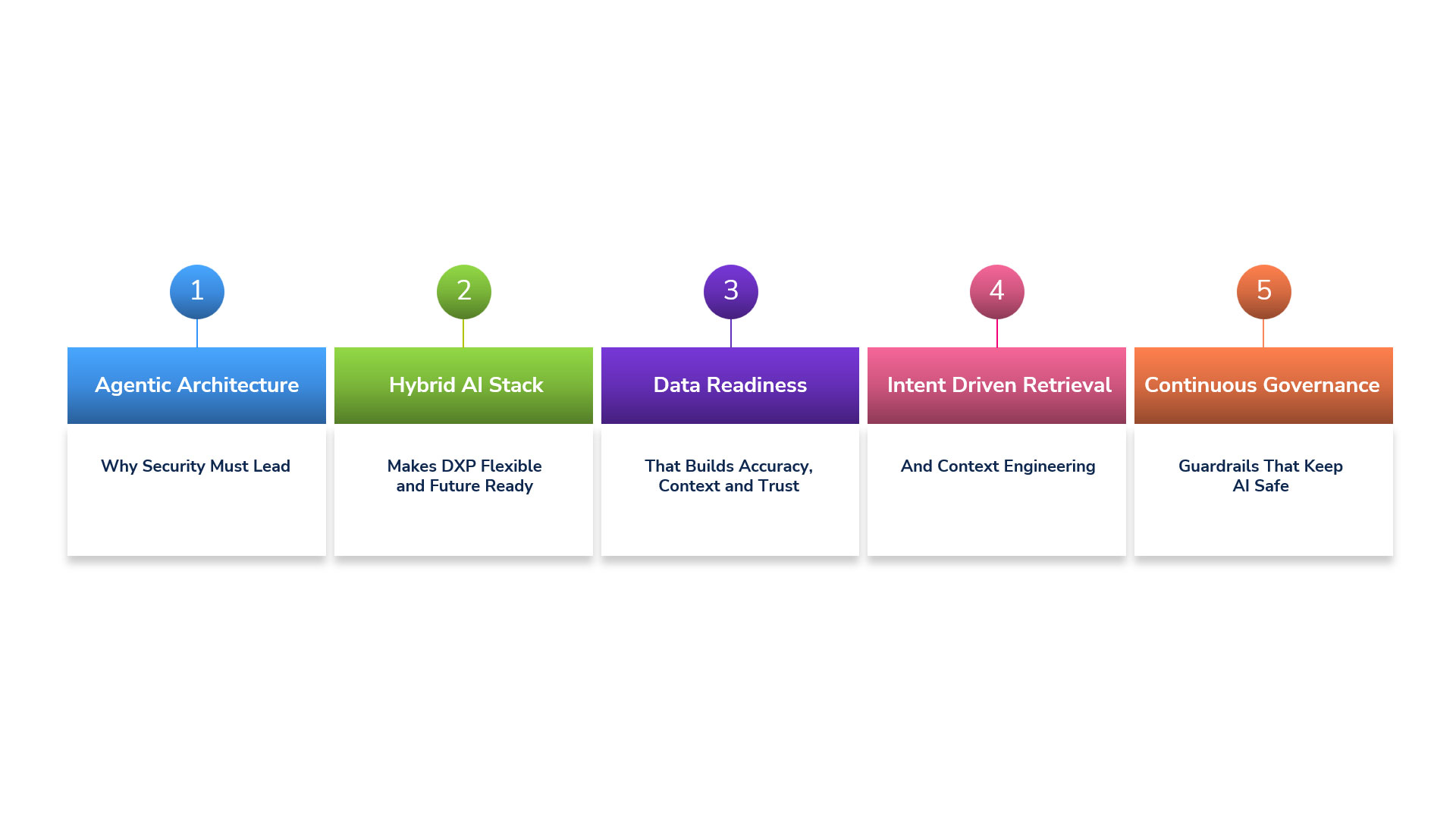
AI is pushing digital experience platforms (DXPs) to go far beyond simple content delivery. They are evolving into intelligent systems that can infer user intent, interpret context and, in many situations, act autonomously on a brand’s behalf. This dramatically elevates the importance of accuracy, trust and governance. As enterprises embrace agentic architectures, MCP and A2A protocols, vectorized data for rapid retrieval and audience-centric personalization, the DXP becomes the central hub that keeps the entire ecosystem aligned. However, many organizations still lack the data quality required to safely support this level of autonomy. This is not primarily a tooling issue; it is an infrastructure challenge. Any brand aiming to thrive must reinforce its foundational layer, prioritizing resilient architecture, built-in security and enforceable governance. AI is not just another layer to bolt onto legacy systems; it signals a fundamental transformation in how digital experiences function. Below are five pillars for achieving successful digital transformation. 1: Agentic architecture and why security must come first AI agents do more than follow predefined rules. They interpret intent, fetch information, apply reasoning and complete tasks from start to finish. This is hybrid decisioning, where deterministic and non-deterministic logic work together. Such behavior creates both significant opportunity and serious responsibility. Agents can resolve complex challenges faster than conventional workflows, yet they can also reach sensitive data, produce customer-facing outputs and initiate actions across multiple systems. Without clear constraints, an AI agent designed to help could inadvertently expose confidential information or mislead customers. When rolling out agents, it’s essential to…