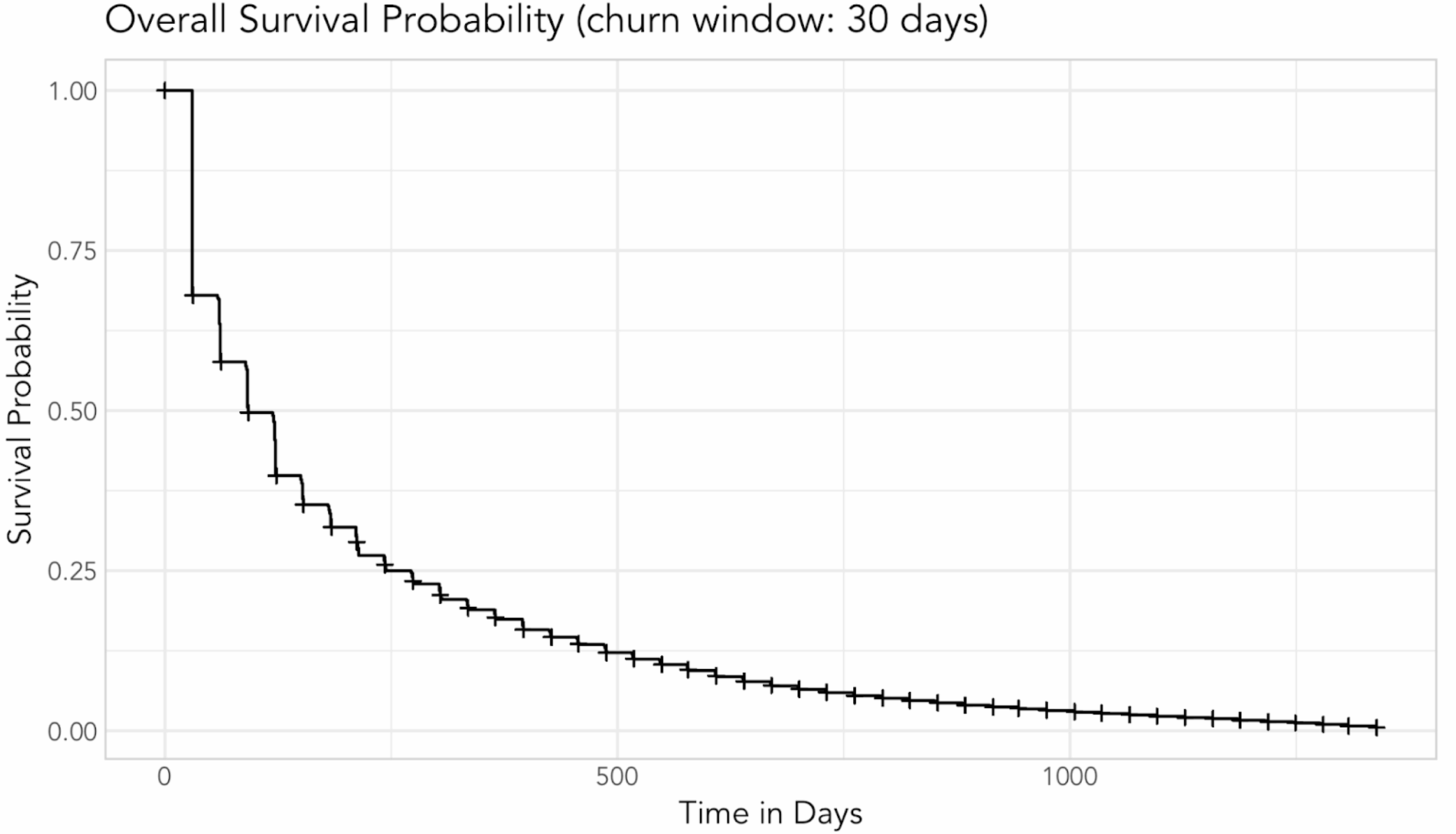
Customer lifetime value (CLV) is often viewed as a fixed number. In reality, it evolves based on how different customer segments behave – and churn – over time. A key pattern to recognize is the “shakeout effect,” where early churn filters out lower-value customers from a cohort, leaving behind a smaller but more stable group with higher engagement and more consistent purchasing habits. This article explores the shakeout effect in CLV analytics, what drives it, and how marketers should factor it into their analysis of churn, retention, and long-term profitability.
What is the shakeout effect in CLV analytics?
Consider a cohort of newly acquired customers. Over time, the “bad” customers drop off, and the remaining “good” customers tend to have a lower likelihood of churn, stronger engagement, better product–market fit, and more reliable purchase patterns. As a result, the overall propensity to churn declines as the cohort matures. This phenomenon is known as the shakeout effect and stems from underlying differences (heterogeneity) across customers.
In terms of time horizons, analysts often rely on one-year windows or full historical purchase data, though the choice varies by business model. For companies with monthly subscriptions, the period immediately after the first 30 days is critical to examine, since no activity beyond that point typically indicates that new customers have churned. When you chart the overall probability of churn over time, this pattern becomes visible.
However, when you segment retention rates by different attributes – for example, UTM medium as shown in the example below – the underlying heterogeneity becomes clearer. In this scenario,…