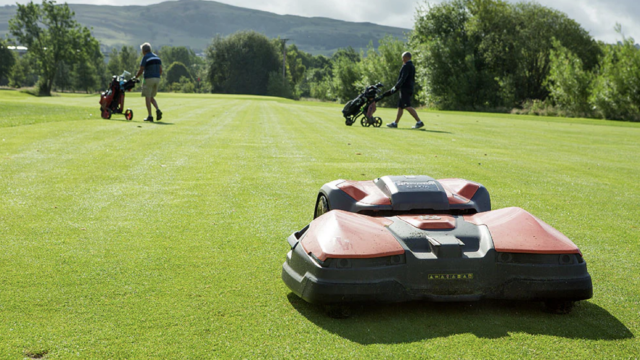
Imagine a golf course at first light. In the past, you’d expect the growl of diesel engines as massive mowers trundled over the fairways, compressing the turf and burning through fuel. At Royal Porthcawl in South Wales, host of the 2024 Women’s British Open, something entirely different took place. Overnight, the fairways were trimmed by a swarm of compact, whisper-quiet robots — marking the first time a major championship has been maintained in this way. This wasn’t a speculative bet by a flashy startup. It was the result of a 30-year evolution at Husqvarna, a Swedish company founded in 1689 that once produced muskets for the king. Today, the company is systematically disrupting the very professional lawn care equipment market it helped build — replacing it with something far more streamlined. This article appears in Branding Strategy Insider’s newsletter. You can subscribe here to receive essays like this directly in your inbox. Husqvarna’s path through this transformation is a textbook example of self-disruption. It also serves as a warning about why even pioneers of breakthrough technologies often find it hard to fully profit from them. When Constraints Spark Innovation The robotic mower revolution started with a seemingly impossible constraint. Thirty years ago, a small engineering team set out to design a solar-powered mower. With just 40 watts to work with (about the output of an old-fashioned lightbulb), a conventional cutting system was out of the question. Their solution was to invent something completely different: small razor-like blades that clip the grass a little each day instead of chopping it down once a week. “That solar limitation forced them to invent a new…