If you’re in your 30s or 40s, this rivalry is baked into you.
Coke owned Christmas. Polar bears. Red trucks. Comfort.
Pepsi owned pop culture. Music. Youth. Celebrities. The Pepsi Challenge.
Back then, this wasn’t really about soda. It was about what felt familiar versus what felt new.
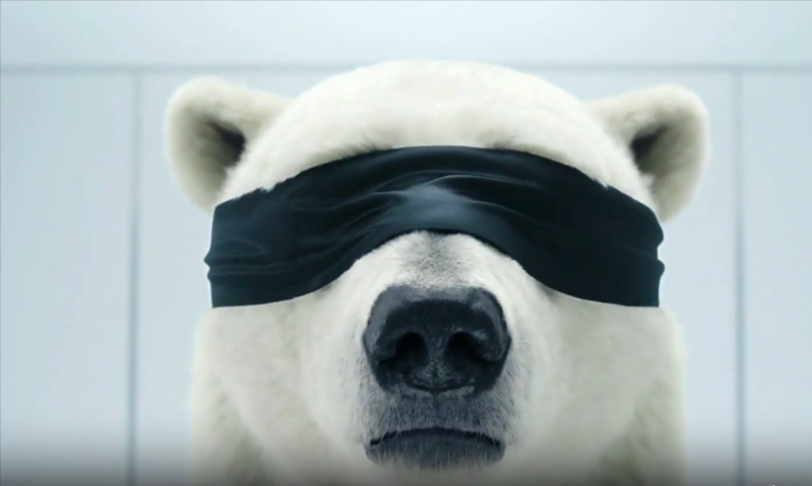
So when Pepsi dropped its Super Bowl spot this year featuring a polar bear, a blind taste test, and a therapist played by Taika Waititi, most of the early commentary went straight to the obvious:
“Pepsi is coming for Coke again.”
That’s true. But it’s not the point.
This ad wasn’t trying to win a soda war.
It was trying to interrupt something much harder to beat.
Habit.
This Wasn’t a Cola Ad. It Was a Permission Slip.
Coke doesn’t win because people sit down and decide it tastes better.
Coke wins because it’s automatic.
Ordering a Coke is muscle memory. You don’t weigh options. You don’t justify it. You don’t think about it at all. It’s the default.
That’s the real competitive advantage.
Pepsi understands this, and instead of trying to shout louder or stack more celebrities into 30 seconds, they went after the behavior underneath the choice.
They gave people permission to pause.
The polar bear, one of Coke’s most enduring symbols, becomes the stand-in for a consumer who has never questioned their default. When that bear prefers Pepsi Zero Sugar in a blind taste test, the moment isn’t really about flavor.
It’s about what happens when someone realizes their choice was never examined in the first place.
That’s the move.
The Polar Bear Was the Strategy, Not the Punchline
This wasn’t parody and it wasn’t nostalgia for nostalgia’s sake.
It was a calculated use of cultural memory.
Pepsi didn’t invent a new character or build a new world. They borrowed a symbol everyone already understands and put it in conflict.
If you grew up watching Coke’s holiday commercials, you don’t need the backstory explained. The meaning lands instantly.
Here’s what that does strategically:
- It activates decades of category context without exposition.
- It reframes Coke’s dominance as habit, not inevitability.
- It signals confidence. Borrowing someone else’s icon only works if you believe you belong in the same conversation.
Most challenger brands sound like challengers. This one didn’t.
That calm tone is the tell.
The Ad Wasn’t Saying “Pepsi Tastes Better”
Blind taste tests are not new. We’ve been arguing about them since the original Pepsi Challenge.
In this spot, the taste test isn’t proof. It’s a storytelling device.
The real message is quieter and more psychological:
- You don’t need a reason to choose differently.
- You don’t have to defend it.
- Even icons reconsider their defaults.
That matters because in mature categories, the barrier to switching isn’t price or access. It’s social and mental. People don’t want to explain themselves.
Pepsi didn’t try to convince anyone. They lowered the cost of switching.
That’s a more realistic way to change behavior.
Why This Spot Works Right Now
This ad would have landed very differently 15 or 20 years ago.
Today, people are questioning defaults everywhere. Careers. Platforms. Institutions. Brands. The assumption that the longest-standing option is automatically the best one doesn’t hold the same weight it used to.
This spot mirrors that mindset without turning it into a speech.
No manifesto.
No urgency.
No big claims.
Just a familiar figure quietly realizing there are other options.
That restraint is what makes it feel current.
The Risk Pepsi Took
This ad doesn’t explain itself. It assumes memory. It assumes context. It assumes the viewer is paying attention.
That’s risky during the Super Bowl, where most brands optimize for immediate recall and obvious messaging.
But Pepsi wasn’t chasing a one-night win.
They were targeting reconsideration moments. The next time someone reaches for a default without thinking. The next time habit is briefly interrupted.
Some campaigns exist to convert.
Others exist to reopen decisions people stopped making years ago.
This one was clearly the latter.
What Marketers Should Take From This
1. Reframe the choice before you try to win it
In mature categories, shouting harder rarely works. Changing how people think about choosing does.
2. Cultural symbols do real work when used with restraint
You don’t need new icons if the old ones still carry meaning. You just need the confidence to use them differently.
3. Lowering friction beats persuasion
Sometimes the strongest message is not “here’s why we’re better,” but “you don’t have to justify this.”
Don’t Miss This Brand Moment
Pepsi didn’t try to dominate the Super Bowl conversation.
They trusted the audience to remember, connect dots, and sit with a quiet idea in a very loud environment.
That’s not accidental. It’s a signal of brand maturity.
The real Pepsi Challenge today isn’t taste.
It’s breaking people out of autopilot.
And that’s a much harder thing to pull off in 30 seconds.