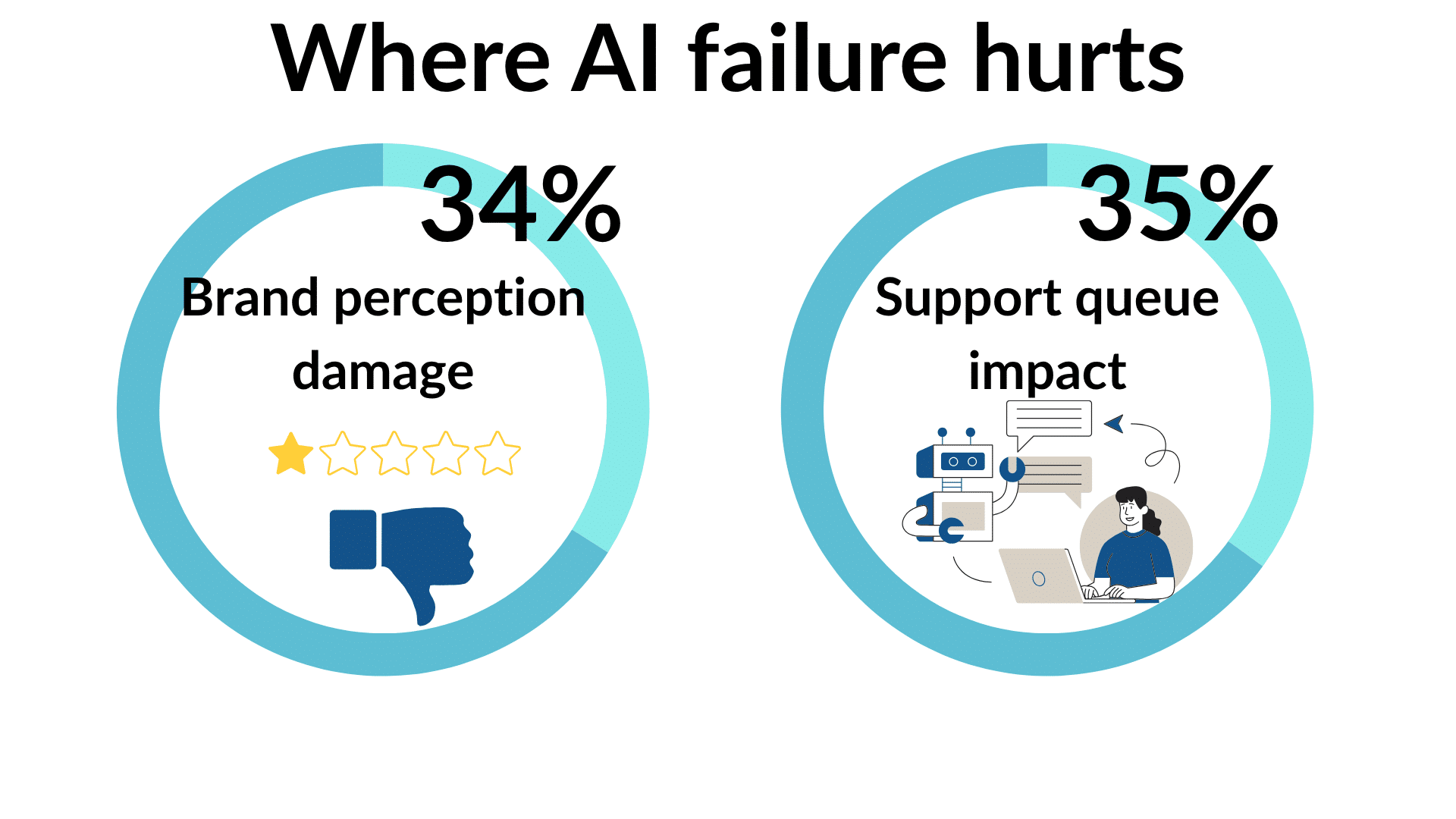
Last year, a bereaved air traveler asked Air Canada’s chatbot about bereavement fares. The bot fabricated a refund policy that didn’t exist. The customer followed that guidance, the dispute went to court, and the case quickly went viral. The court dismissed Air Canada’s claim that its chatbot was a “separate legal entity” responsible for its own behavior and ordered the airline to pay damages. That episode has become a warning for any brand scaling AI in customer communications. And new research from customer communications platform Sinch indicates it’s anything but an isolated incident. According to Sinch’s “AI Production Paradox” report, 74% of enterprises have already had to roll back a deployed AI agent because of governance breakdowns. Here’s the twist: organizations with the most advanced guardrails — those that poured the most resources into compliance, safety processes, and oversight — rolled back even more often, at a rate of 81%. The teams working hardest to avoid failure are actually reversing deployments more frequently, not less. “If governance was the solution, the most mature teams would roll back less, not more,” said Daniel Morris, chief product officer at Sinch. “Engineering teams are devoting most of their time to building and maintaining safety systems instead of enhancing the customer experience. That’s the guardrail tax that slows organizations down.” The cost of the guardrail tax For marketing organizations, that guardrail tax hits directly. Every hour engineering spends reworking safety infrastructure is an hour not invested in improving the customer experience…