
Over the past week, I asked HubSpot marketers to be brutally honest about what truly moved the needle for them in 2025 — and what they decided to leave behind.
Six HubSpotters share their biggest “why on earth didn’t I do this earlier?” realizations from the last year — from reimagining how they lean on AI to placing smart bets that are hard to measure.
If you could rewind to January 2025, what would you tell yourself to stop overanalyzing?
Adam Biddlecombe, Lead marketer, AI media strategist
“Stop overcomplicating AI. It’s thrilling — easily the most significant tech shift I’ve seen — but a lot of use cases are still in test mode and not reliably accurate.
“The biggest gains came from keeping things straightforward. Tiny tasks, small workflow improvements. Spinning up a few custom GPTs for specific roles, getting meeting notes turned into a quick Slack recap, shaping scattered thoughts into a sharp campaign brief.
“Those small building blocks have made me far more productive, organized, and effective at my job.”
Rory Hope, Senior manager, EN Growth
“I’d tell myself not to spiral about how AI is shaking up top-of-funnel search marketing, because this year we’ve watched the search community pivot toward optimizing for AI visibility. We now have AI visibility tracking tools, battle-tested AEO tactics, and clear AEO reporting KPIs.
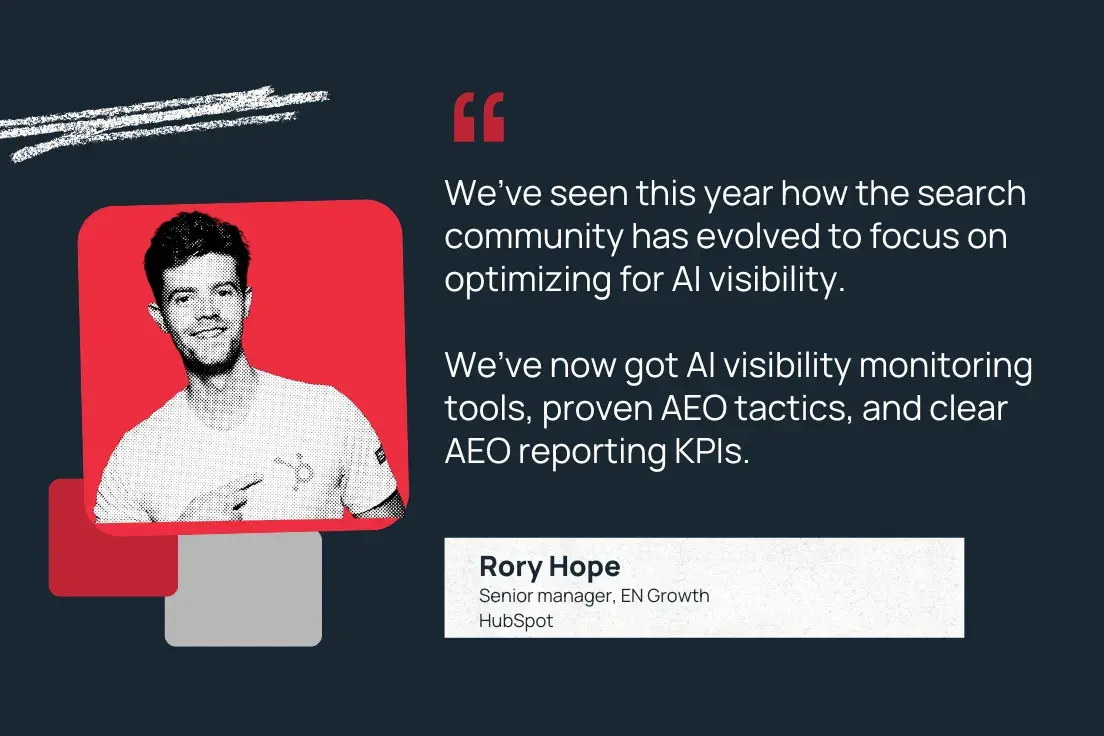
“Back in January 2025, the path forward felt murky, but we’ve managed to work through that ambiguity and build a new AEO framework that’s scaling AI visibility for HubSpot.”
What was the smallest tweak you made in 2025 that delivered the biggest upside?
Nuriel Canlas, Senior marketer, HubSpot Media
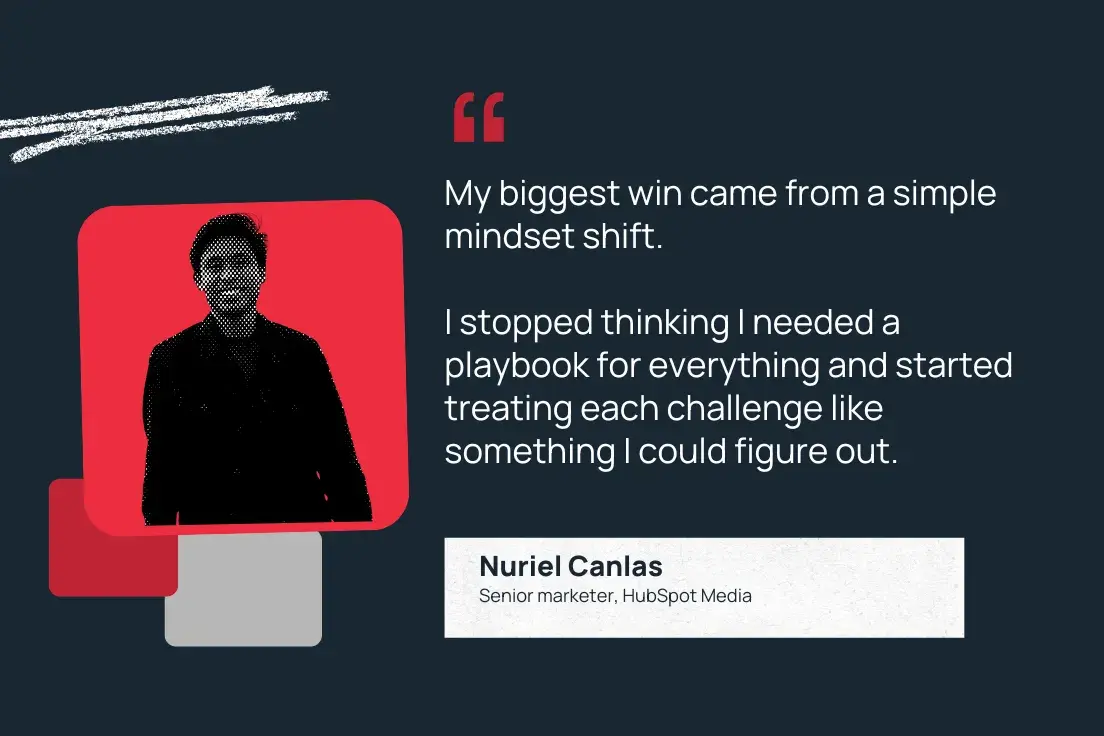
“My biggest win started with a simple mindset shift. I stopped assuming I needed a playbook for every situation and began treating each problem as something I could figure out as I went. Once I embraced that, my pace picked up and my outcomes improved.”
Amanda Kopen, Manager, Marketing
“One small adjustment I made in H1 2025 that had an outsized effect on H2 was turning one 15-minute meeting each month into a quick AI briefing for my team. AI Overviews, new models, and declining organic traffic were stressful — especially for folks with SEO-heavy roles. But taking the time to distill industry updates into short, focused lessons gave my team the confidence to weave AI into their daily work.
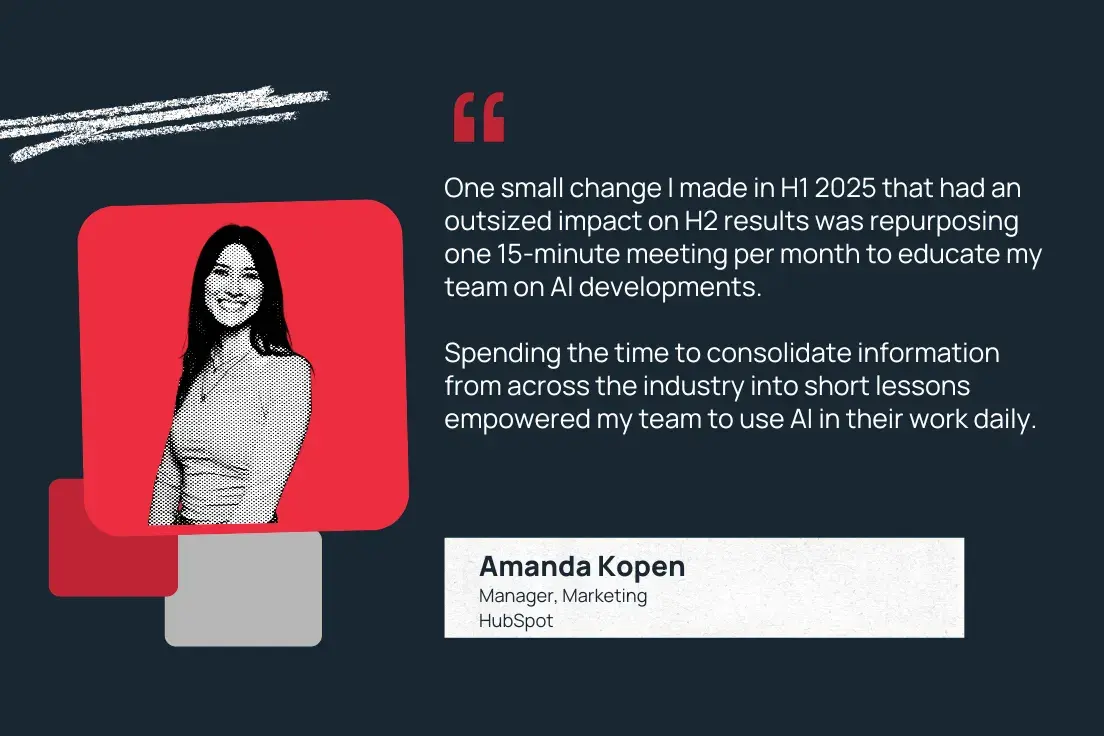
“Now that it’s December, they’re the ones bringing me news and insights — and sharing them with each other. Our efficiency and creativity have jumped, and that’s helped drive growing AI referral demand.”
What long-standing marketing advice did you finally tune out this year — and why was that the right move?
Amy Marino, Senior director, brand and social
“The idea that AI will make creative strategists obsolete is completely off base.
“We brought AI into our social content production this year, and the opposite happened: AI actually increased the importance of creative strategy and taste. Anyone can spin up content now. But being able to tell what’s viral vs forgettable, culturally fluent vs cringe, and what protects our voice vs sounding like bland AI — that’s what really makes content land.
“AI is pretty bad at being cool, compelling, and truly distinct, and I’m not convinced that’s something you can just prompt your way into.”
Which marketing metric did you finally stop fixating on — and what changed when you did?
Jonathon McKenzie, Head of brand paid media
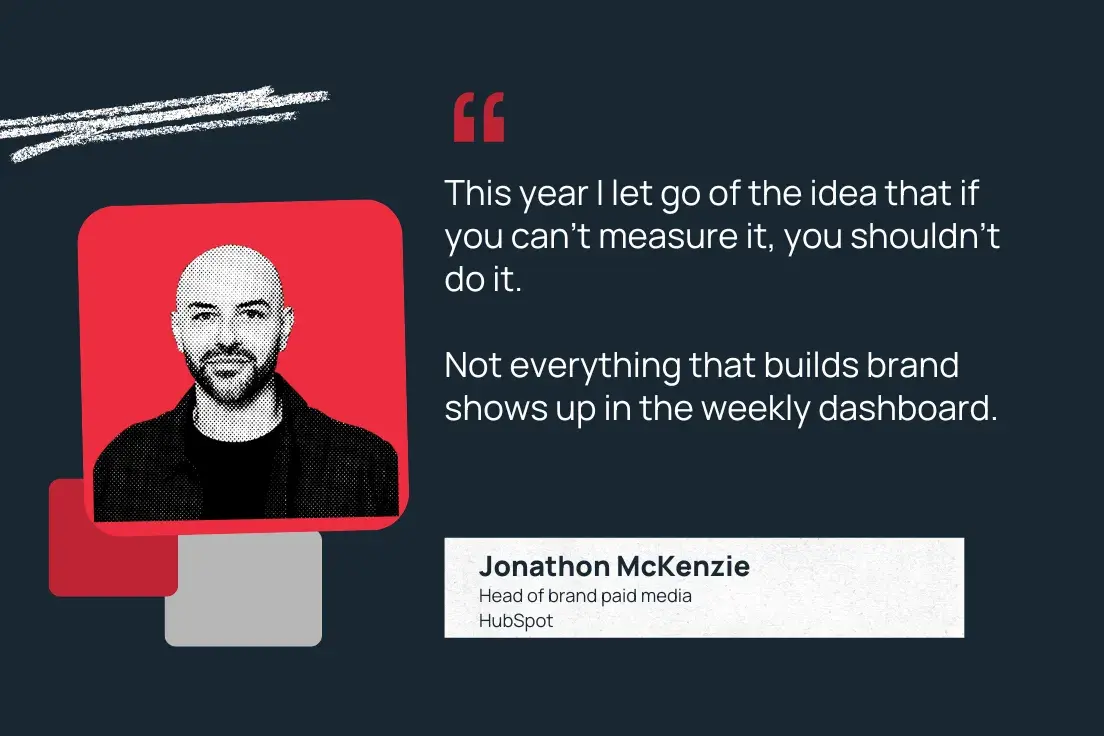
“This year I dropped the belief that if you can’t measure it neatly, you shouldn’t do it. We invested in out-of-home in a market where awareness had plateaued, even though it didn’t plug into a tidy LTV model. It paid off. Not every brand-building move shows up in your weekly dashboard.“

