For the past two decades, the CPG innovation failure rate has consistently stayed between 70% and 90%.
Over that same time, the industry has embraced a range of frameworks – Design Thinking, Jobs To Be Done, Blue Ocean Strategy, and Horizon Mapping. Each was promoted as a way to help organizations better translate consumer opportunities into action. Each arrived with its own training programs, toolkits, and rituals.
Yet the failure rate has barely budged.
The issue is not that these frameworks are flawed. They generally do what they promise. The real problem is that they are deployed inside organizations whose underlying operating systems are deeply category-centric.
This article is part of Branding Strategy Insider’s newsletter. Join the world’s smartest marketers and subscribe here for actionable insights delivered straight to your inbox.
Category-centricity defines opportunity by where products are currently placed on the shelf. It segments consumers by what they buy in that aisle today. It treats the category as the default frame and interprets consumer behavior only through that perspective. This mindset mirrors organizational structures, making work easier to measure and manage. It is highly effective, even essential, for short-term innovation.
However, it becomes constraining when companies try to set strategy and build longer-term or more transformational pipelines, because category logic is anchored in the “now.”
1. Design Thinking breaks down when the problem is defined by the category
Design Thinking was created to help us reframe business challenges from the consumer’s perspective so we could ideate and prototype around genuine human problems or opportunities. Jeanne Liedtka’s research at UVA Darden shows that breakthrough results come from redefining the problem, not from simply generating more ideas.
In category-centric organizations, however, it often devolves into the latest idea-generation exercise because the category has already dictated what the opportunity is. The problem is accepted rather than examined. The result: piles of Post-its, rounds of dot voting, and frequently, the same ideas that surfaced in last year’s scrappy brainstorm.
Outcome: Design Thinking turns into an execution ritual layered on top of the very assumptions it was supposed to question.
2. JTBD breaks down when jobs are reduced to category benefits
Jobs To Be Done was created to move our focus from product features to human motivations. Clayton Christensen’s work showed that most brand switching is driven by emotional or contextual jobs, not purely functional ones.* The framework was meant to lift thinking beyond category boundaries.
But when the category remains the reference point, JTBD is twisted into a list of organizational tasks. Jobs are translated into category jargon because that language feels defensible in internal discussions.
“Shake my morning blues with a little self-indulgence” is recast as “high-quality, premium coffee.”
“I want to make up for my terrible dietary choices yesterday” is rewritten as “I want a breakfast protein bar.”
In one workshop I joined, the exercise was labeled “Brand Jobs To Be Done” and what was expected was essentially a list of category benefit statements.
Outcome: A sophisticated rationale for existing roadmaps, stripped of the transformative power it was designed to provide.
3. Trend work breaks down when trends are treated as ingredient checklists
Trend immersion shows how behaviors show up in what people search, explore, and purchase. Datassential, Tastewise, Innova, and WGSN offer rich, inspiring views rooted in emerging ingredient and format signals.*
The challenge lies in how organizations read those signals. Rather than probing why a behavior is emerging, trends are reduced to a list of attributes, and teams concentrate on what can be executed within current category limits.
Outcome: A product development wishlist based on what is hot right now, which may be irrelevant by the time the product actually hits the market.
4. Horizon Mapping breaks down when horizons are forced through today’s category structure
Horizon Mapping is meant to balance short-term performance with long-term advantage. Horizon 1 maintains. Horizon 2 scales. Horizon 3 explores. BCG’s research shows that outperformers win by investing where they have structural advantage, not by sprinkling resources across every option.*
In most organizations, though, only Horizon 1 truly counts. Horizon 3 becomes a wish list of technologies or ingredients with no real plan to build capability. Horizon 2 shrinks into minor renovations. Nothing gets meaningful investment until it already shows up in the category. Companies fail to build strong platforms that could serve multiple business units because those units are siloed around categories.
Outcome: A tool intended to chart a path to the future ends up reinforcing the short-term focus it was meant to challenge.
What Consumer Centricity Can Look Like
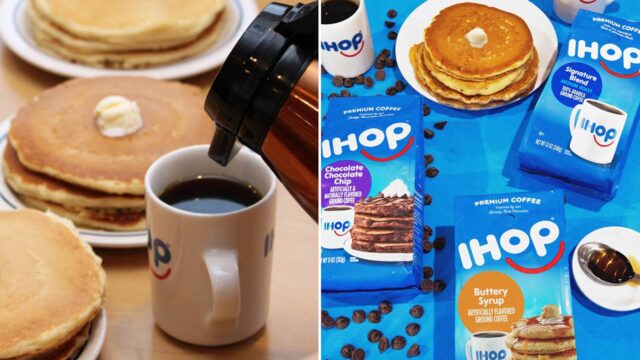
Take IHOP’s move into retail coffee. It is a strong, premium coffee brand.
Category logic would have pushed us toward conventional premium coffee language, mirroring how the big players spoke. Had we gone that route, we would have struggled to stand out. It also would have been a disadvantage, since many premium competitors already had deep coffee expertise.
A consumer-centric lens forced us to look not only at how people were buying coffee in the aisle, but also at how beverage habits were shifting beyond it. We saw the rising influence of younger drinkers spending on café-style, dessert-like beverages. For them, origin, terroir, and tasting notes mattered less than sensory pleasure and emotional reward. Coffee, for these consumers, was not just a morning caffeine habit. It was a treat.
That shift in perspective informed everything: product strategy, positioning, and what “premium” should mean in coffee. It led to one of Kraft Heinz’s most successful innovations in nearly ten years while strengthening IHOP’s equity in taste and indulgence.
Reframe
Bain’s analysis indicates that only 12% of CPG innovations generate meaningful incremental growth. That figure has been essentially flat for twenty years.
Not because the frameworks are inadequate. Not because teams lack skill. But because the lens never truly changes, locking teams into short-term thinking.
Category-centricity defines opportunity, writes the brief, shapes data interpretation, judges ideas, and assesses risk based on how consumers behave in the category today. It works well for near-term innovation. If you have Circana or Nielsen panel data, you already possess one of the strongest tools for deciding what to do now to drive revenue.
Yet the core innovation challenge is rarely what to do now. It is what to prioritize next.
If every framework is filtered through the logic of “now,” the output cannot unlock meaningful growth. Everyone ends up doing similar things within the same frame.
As a marketer, your role is to compete. Compete differently with The Blake Project.
Consumer centricity demands stepping outside category lines long enough to understand the behaviors that drive choice. Until organizations change the lens, every new methodology will follow the same cycle: adopted with excitement, absorbed by the category, delivering the same outcomes.
The tools were never the core issue. The lens was.
Contributed to Branding Strategy Insider by Sweta Kannan, CPG Marketing and Innovation Executive
At The Blake Project, we partner with clients worldwide, at every stage of growth, to define and express what makes them competitive and valuable at pivotal moments of change. Please email us to learn how we can help you compete differently.
Branding Strategy Insider is a service of The Blake Project: A strategic brand consultancy specializing in Brand Research, Brand Strategy, Brand Growth, and Brand Education