Netflix House Isn’t Just Experiential Marketing. It’s a Controlled Distribution System.
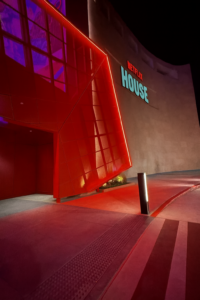
Netflix House sits attached to one of the most polished malls in the Dallas–Fort Worth metroplex: the Galleria. Valet parking. Luxury retailers. Holiday lighting designed to slow people down and keep them lingering.
That location choice tells you everything before you even walk inside.
Netflix didn’t build a destination attraction. They embedded a branded environment into an existing flow of high-intent foot traffic — people already primed to spend time, money, and attention.
This isn’t experiential marketing as most brands practice it.
It’s physical distribution — tightly controlled, intentionally paced, and designed for repeat behavior.
Control Is the Product
I went on the second night after opening, a Friday, expecting crowd chaos. There were plenty of people — but no congestion.
That was the first signal.
Large white corridors. Open sightlines. Empty space that felt intentional, not unfinished. Netflix uses timed ticketing for its core “Studios” experiences, which caps density and smooths traffic.
Most brands chase foot traffic. Netflix limits it.
Why? Because control increases:
-
dwell time
-
comfort
-
memory retention
-
likelihood of staying longer (and spending more later)
Experiential marketing usually tries to feel alive. Netflix House feels managed — and that’s why it works.
Immersion Without Labor Dependency
The Squid Game experience makes another point marketers often miss.
The environment does most of the work.
Yes, there are live hosts — sarcastic, on-theme, doing just enough to anchor the experience. But much of what looks like staffing is actually set design: mannequins, lighting, sound, transitions between rooms.
This is immersive without being labor-heavy, which makes it scalable and sustainable.
The games themselves are fast. Even Red Light, Green Light is redesigned for speed. The full experience runs just under an hour — long enough to feel complete, short enough to keep throughput high.
Netflix isn’t recreating scenes for realism.
They’re engineering emotional recall efficiently.

Why It Feels Like an Art Gallery (On Purpose)
After the trials, you don’t exit into a retail funnel. You exit into space.
Wide corridors. Minimal noise. Installations that look static until they glitch, move, or transform. Art that reveals itself slowly.
This is one of the smartest decisions in the entire experience.
That pause resets the brain. It prevents fatigue. It increases the odds that people stay upstairs longer, eat, play, shop, or simply wander.
Most experiential environments overwhelm. Netflix House regulates stimulation.
That regulation is what keeps people inside for hours instead of minutes.
Monetization Without Pressure
Netflix House monetizes laterally, not aggressively.
-
A small merch setup near the Studios
-
A full retail store upstairs that opens directly into the mall
-
A restaurant, a bar, and open seating
-
An arcade-style game room (Replay) layered with Netflix IP
You don’t feel sold to. You feel given options.
People who didn’t book an experience still spend money.
People waiting for food play games.
People shopping drift into the bar.
Every path feeds another, without forcing conversion.
This is not upsell culture. It’s ecosystem design.
The Mistake Marketers Keep Making
Most experiential marketing is built backward.
Brands optimize for:
-
buzz
-
spectacle
-
shareability
Netflix optimized for:
-
pacing
-
control
-
repeat visits
-
operational efficiency
Netflix House doesn’t need to “go viral.”
It needs to quietly keep people coming back.
That’s the difference between a campaign and a system.
The Real Takeaway
Netflix House isn’t about fandom.
It’s about ownership.
In a world where ads are skippable and platforms are rented, Netflix is building places it controls — physically, emotionally, and operationally.
This isn’t experiential marketing.
It’s distribution, made human.