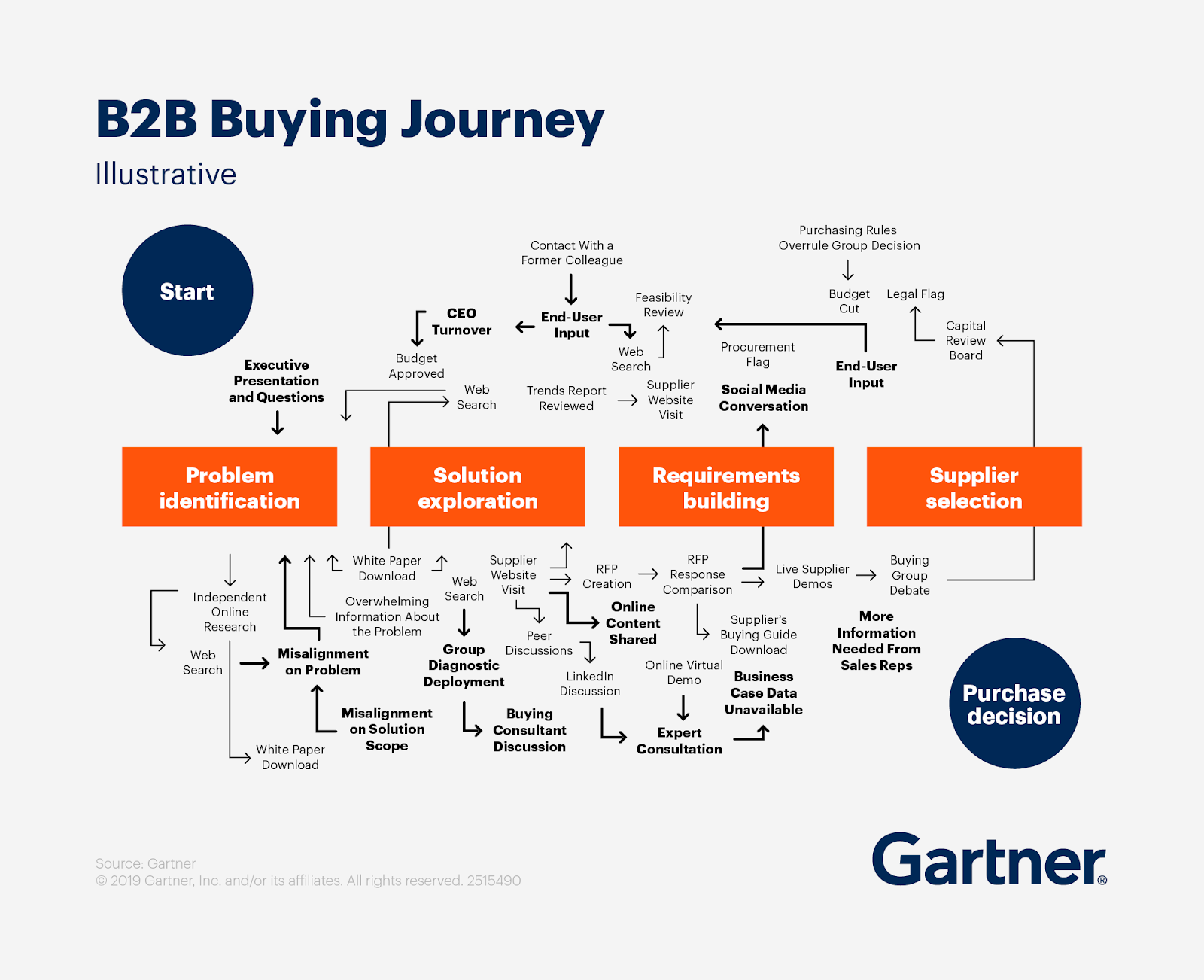
When you define, track and improve the stages an account moves through on its path to becoming a customer, the whole attribution debate becomes irrelevant. Yes, I’m going there. Teams obsess over impressions, clicks, site visits, form fills, event sign-ups, content downloads and MQLs, trying to precisely link those actions to the moment a prospect turns into a customer. That’s absurd. We’re selling six-figure software. No single ad, email, event or cold call is solely responsible for closing that deal. We chase this because we want to tie our work to revenue, demonstrate impact and justify our existence. I’ve done it myself. Early in my career, I pushed hard to persuade leadership that my MQLs were flawless and would inevitably convert. I was mistaken. On their own, these activity metrics did not forecast revenue. So what does? Account progression.
Dig deeper: How to use CTV to strengthen your ABM strategy
What account progression really means
Before any sales motion (meetings, demos, proposals, bookings) happens, something else has to occur first. And before that, there’s another prerequisite step. It sounds obvious when you spell it out, but most GTM teams neither measure nor truly grasp this. Account progression is about clearly defining stages that reflect where an account is in its buying journey, then monitoring how accounts move through those stages over time. The stages I usually work with are: unaware, aware, engaged, qualified, sales-ready and customer. Each…