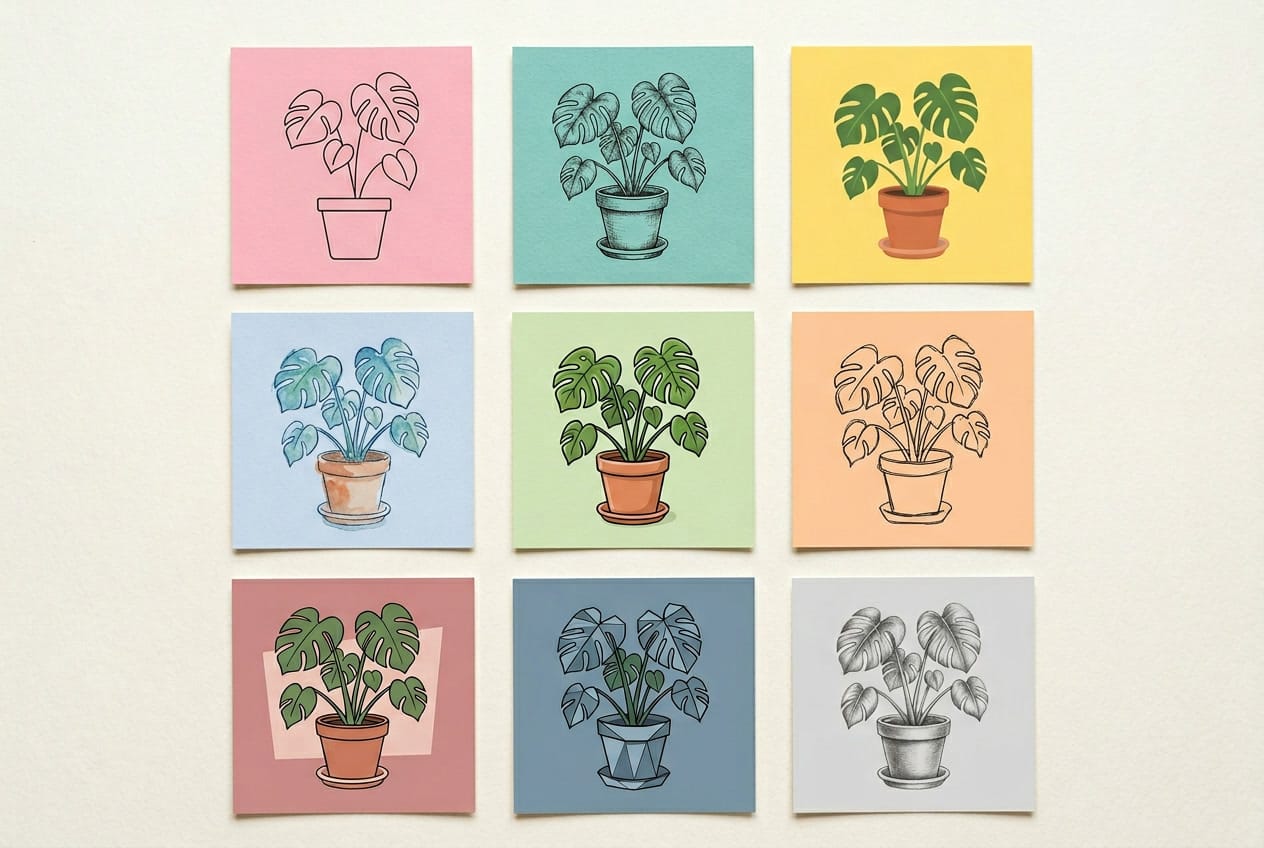
I haven't typically used AI image generators in my creative work—or at least, I hadn't before I started putting this piece together. Whenever I tried to imagine a reason to generate an image, my mind jumped straight to photorealistic pictures. Then I'd immediately wonder: why not just grab my phone and snap a photo instead? What I didn't realize was that I was only thinking about a narrow part of what these tools can actually do.
I'm not especially gifted when it comes to traditional art. Case in point: I can write, and I can put together a solid carousel in Canva or even Figma. But I can't draw, and I definitely can't produce the polished illustrations I see other creators using everywhere. That gap turned out to be exactly where AI image generators shine—not as a substitute for photography, but as a way to create visuals I'd never be able to make myself.
So I tried nine different tools with that in mind, zeroing in on scenarios where they genuinely solve a creator problem. Everything I discovered about crafting effective prompts, which tools stood out, and the AI image generators worth paying attention to in 2026 is collected here.
Key Takeaways
I put nine AI image generation models through three specific prompts—a hand-drawn sticker sheet, a photorealistic product flat lay, and an embroidery-style typography graphic—to find out which ones actually produce creator-ready results.
Nano Banana 2 (Google) emerged as the most reliable overall. It delivered the most accurate illustrations, came closest to true photorealism, and managed typography surprisingly well. If you…