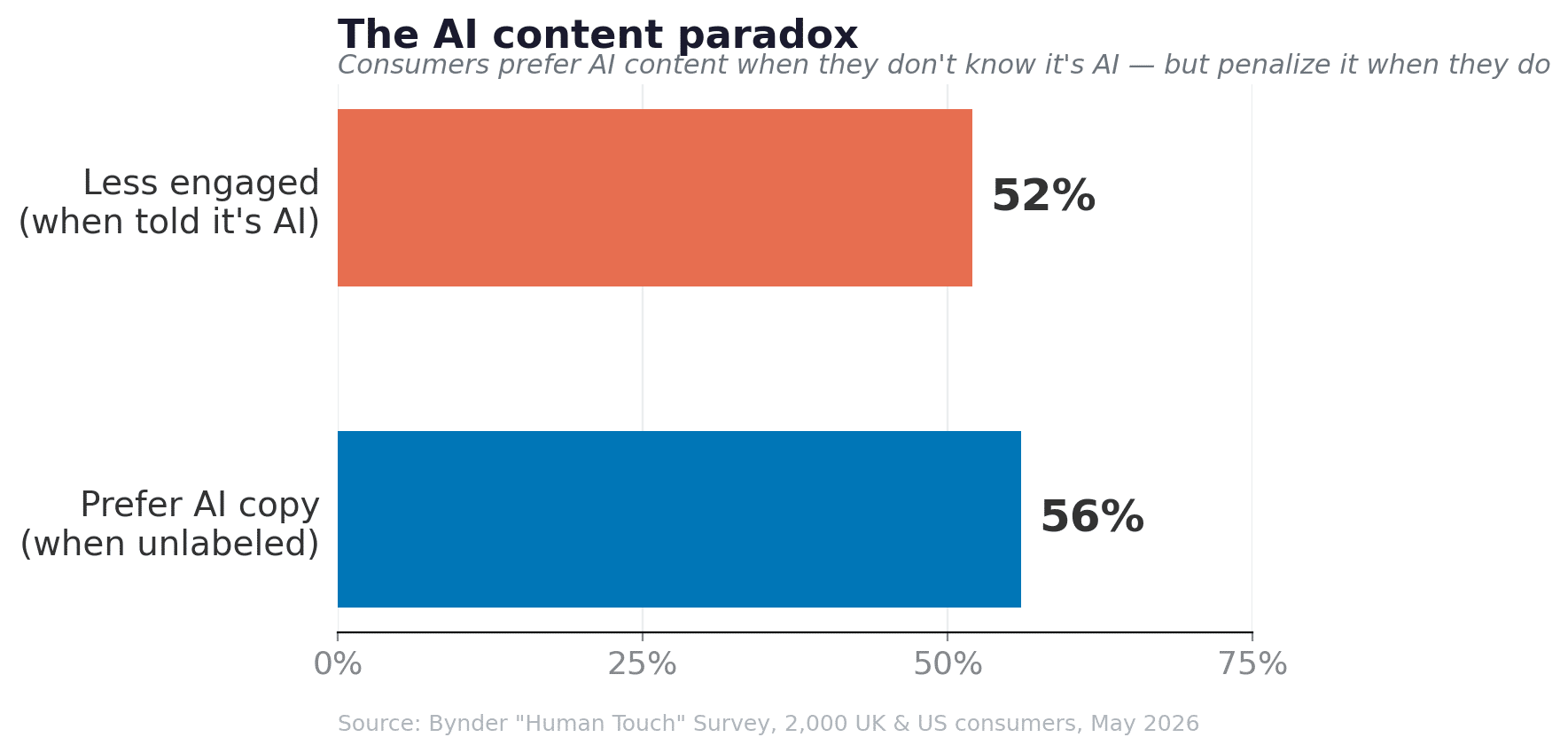
The pressure to churn out more content, more quickly, with fewer resources is intense. AI has become the go-to solution — 74% of marketers are already using or piloting AI-generated content, and 43% expect to boost their AI spend this year, according to new data from Validity. Yet there’s a core paradox for marketers racing to scale with AI: when audiences don’t realize content is AI-written, they frequently like it more. Once they do know, they tend to punish the brand. A recent Bynder survey of 2,000 consumers in the U.K. and U.S. highlights this contradiction. Respondents saw two articles on the same subject — one produced by ChatGPT and one by a professional copywriter — with no labels. Among those who expressed a preference, 56% picked the AI-written piece as more engaging. The AI version came out on top — as long as its origin was hidden. But when participants were told that the same content had been generated by AI, 52% reported feeling less engaged. Same article. Same wording. Completely different response. Validity’s research, based on surveys of 500 U.S. marketers and 1,000 U.S. consumers, shows a growing gap between how brands deploy AI and how audiences perceive it. On the consumer side, 40% say they would trust a retailer’s marketing emails less if they knew AI wrote them. Only 25% say that knowing an email was AI-generated would make them more trusting. And 55% of consumers now decide what to do with emails based solely on AI-generated inbox summaries — without opening the full message…